The Island Nation Planning To Move its entire population
Imagine waking up one morning and realizing that your entire country is slowly disappearing, not because of war or politics, but because the ocean is quite literally swallowing it. This is not a thought experiment for the people of Tuvalu. It’s their reality.
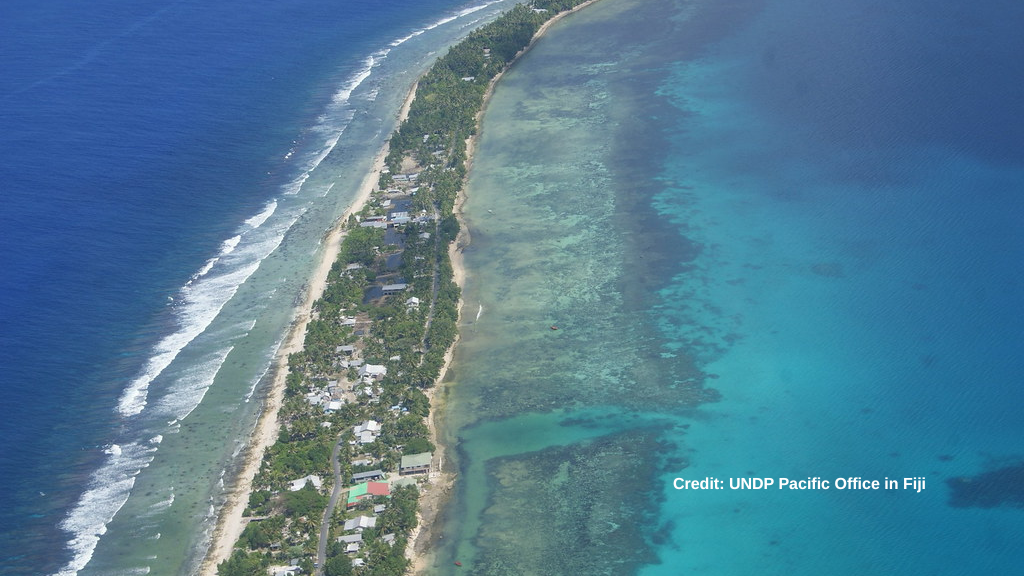
Tuvalu is a tiny island nation in the Pacific, home to around 11,000 people. Low-lying, ringed by coral, and postcard-beautiful, it once seemed like the kind of place time forgot. But time didn’t forget Tuvalu. Climate change didn’t either. Rising sea levels, saltwater intrusion, and stronger storms have turned this nation into one of the world’s first candidates for something almost unthinkable: moving an entire population abroad.
Faced with this, Tuvalu is trying to answer a haunting question: if your land disappears, does your country have to disappear with it?This is where digital preservation comes in. Tuvalu’s leaders have begun talking about creating a “digital nation” — a version of Tuvalu that can exist even if its atolls one day cannot. Think of it as archiving not just old photos or documents, but an entire country’s identity. From legal records and land titles to cultural heritage and language, the goal is to upload Tuvalu’s statehood into the digital realm so that its people can still be Tuvaluans, even if they no longer live on Tuvaluan soil.But preserving a nation is not just about servers and storage; it’s also about people, and where they will live.
That’s where the Falepili Union Treaty with Australia enters the story. “Falepili” is a Tuvaluan word that roughly means being a good neighbor—caring, reciprocal, bound by responsibility. In 2023, Tuvalu and Australia signed this treaty, laying out a path for Tuvalu’s people to move to Australia as climate pressures intensify. Under this agreement, Tuvaluans will be able to relocate in a managed, dignified way, not as sudden climate refugees fleeing disaster, but as partners with recognized rights and a maintained national identity.
To make this migration fair and organized, Tuvalu has explored mechanisms akin to visa ballots. Instead of a chaotic exodus, people apply, are selected in stages, and move with legal visas and a plan. It’s a system designed to avoid panic and preserve community ties, allowing families and villages to decide how, when, and if they move—while their government negotiates on their behalf.
What Tuvalu is doing may become a blueprint for other vulnerable nations: using digital preservation to protect sovereignty and memory, using treaties like the Falepili Union to secure physical safety, and using structured processes such as visa ballots to move people thoughtfully rather than desperately.
In a way, Tuvalu is rewriting what it means to be a country. It is asking whether a nation is just land surrounded by water—or a living web of people, culture, and law that can outlast the very ground beneath their feet. For history lovers, this is one of those rare moments when you can watch, almost in real time, a new chapter in the story of the nation-state being drafted by a small group of islands in a very large ocean.