Is There A Lake That Turns Animals Into Stone?
—
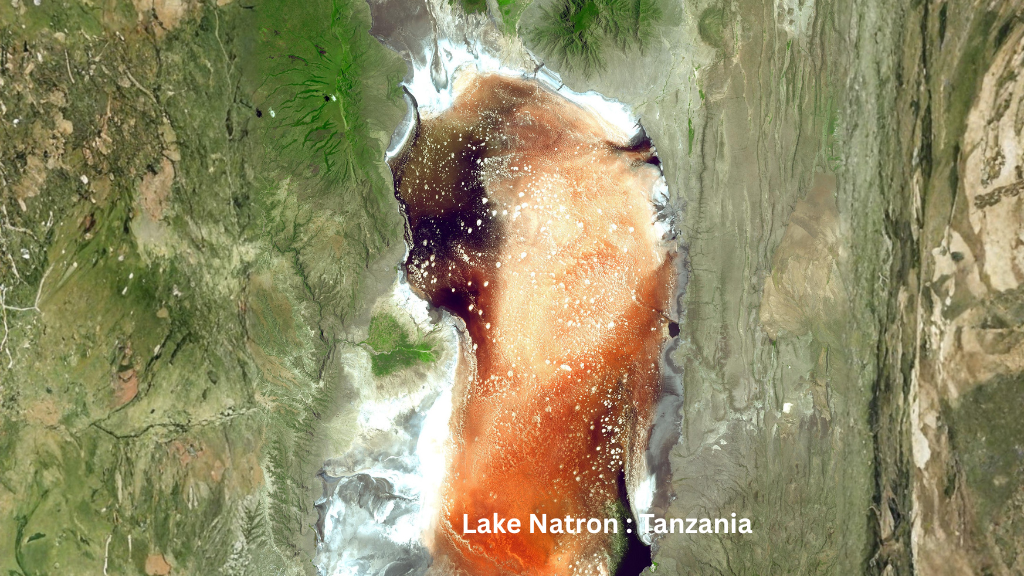
If you were wandering through northern Tanzania and stumbled onto the shores of Lake Natron, you might think you’d walked into a myth. The water shimmers red in the heat, the air is thick, and along the shoreline you might see something eerie: perfectly preserved bird carcasses, stiff and pale, looking almost like stone statues.This is where the legend begins.
Lake Natron sits in the East African Rift Valley, in the shadow of the active volcano Ol Doinyo Lengai. That volcano is key to the story. It spews out unusual lava rich in sodium carbonate and other minerals, which wash down into the lake. Over thousands of years, this has created a body of water so alkaline that it can reach a pH of around 10.5—similar to household ammonia.
The lake’s name comes from “natron,” a naturally occurring mixture of sodium carbonate and baking soda. Ancient Egyptians once used natron to dry out and preserve mummies. At Lake Natron, those same kinds of minerals saturate the water. When small animals—often birds—die in or near the lake, their bodies can be coated with these minerals. Over time, this process of calcification can harden and preserve them in uncanny detail.That’s how the “stone animals” story got started. The photographer Nick Brandt famously documented birds and bats calcified along the shoreline, posed as if turned to stone. The images were so striking that it was easy to believe the lake itself had some Medusa-like power.
But here’s the comforting truth: Lake Natron doesn’t magically turn living animals to stone the moment they touch it.Many creatures actually live in and around this harsh environment. Flamingos famously thrive here, feasting on the algae that love the hot, mineral-rich water. Certain fish species have adapted to its extremes. The animals that end up calcified are usually already dead—killed by collisions, exhaustion, or becoming trapped—before the minerals finish the work of preserving them.
What Lake Natron really offers is not a horror story, but a stark reminder of how strange, specialized, and resilient life can be. The same lake that preserves dead birds like sculptures is also a vital nursery for flamingos. The same minerals that once dried Egyptian mummies now quietly coat shoreline carcasses in Tanzania.So no, there isn’t a cursed lake that actively turns animals into stone. There is, however, a very real lake—Lake Natron—whose unique chemistry and minerals can calcify remains in a way that feels almost mythic. It sits there in the Rift Valley, glowing red in the sun, blurring the line between science and legend just enough to make you look twice.If